


Views: 0 Author: Site Editor Publish Time: 2026-08-19 Origin: Site


Budgeting for electrical distribution infrastructure requires moving past baseline unit quotes to understand the complete capital expenditure required for deployment. Procurement teams and electrical contractors often face severe budget overruns during infrastructure upgrades. Hidden expenses hide in shipping logistics, specialized mounting requirements, efficiency compliance mandates, and fluctuating raw material markets. Evaluating a quote based solely on the equipment invoice guarantees inaccurate project forecasting.
This guide breaks down the realistic cost parameters of a single phase transformer. We examine how capacity, mounting configurations, application types, and regulatory standards impact final procurement expenses. By analyzing the engineering variables and site preparation requirements, project managers can build accurate budgets. You will learn how to navigate supply chain variables, select the right materials, and avoid common procurement pitfalls that derail electrical deployments.
Baseline Price Variance: Base unit prices scale significantly for high-capacity commercial models, heavily dependent on kVA ratings and voltage steps.
Mounting Dictates Installation Costs: The choice between pole, platform, and pad-mounted configurations significantly alters site preparation, rigging, and labor expenses.
Efficiency Standards Impact CapEx: Compliance with modern energy standards increases upfront expenses but delivers measurable reductions in no-load losses and operational expenses.
Application Specifics Matter: Costs vary significantly based on whether the unit is a low voltage distribution transformer, a specialized step-up unit, or a simple current transformer for metering.
Material Volatility: Fluctuations in copper, aluminum, and electrical steel markets directly dictate lead times and final quote validity periods.
Establishing accurate budgetary baselines before issuing a Request for Quote (RFQ) prevents category confusion. Buyers must differentiate between equipment types early in the planning phase. Misunderstanding the technical classification of the required equipment leads to massive discrepancies in expected budgets. You must align your technical specifications with the correct manufacturing category to secure accurate pricing models.
Clarify the massive functional difference between a distribution transformer and an instrumentation unit. Distribution units deliver actual power to facilities and represent a major capital investment. They require heavy core steel, massive copper or aluminum windings, and extensive cooling systems. We install these to step down utility grid voltage to usable facility levels. Current transformers handle metering and monitoring at a fraction of the expense. They simply step down current for safe measurement by relays and meters. Mixing these up on an RFQ causes severe errors and wastes engineering time. Always specify that you need a power distribution unit when requesting heavy infrastructure quotes. Field crews rely on accurate procurement to ensure the right gear arrives on site.
Residential and commercial capacities dictate the expected price brackets. Low to medium kVA units serve residential subdivisions or light commercial applications. These units typically range from 5 kVA up to 50 kVA. They utilize standard manufacturing templates, which keeps production expenses relatively stable. Medium to high kVA units handle heavy industrial loads, often scaling up to 333 kVA or 500 kVA. The required capacity scales the manufacturing expense directly. Higher kVA ratings demand exponentially more raw materials. They require larger tanks, more dielectric fluid, and heavier structural supports. Industrial units also frequently require custom voltage taps, which further elevates the baseline manufacturing expense. When sizing these units, electrical engineers must calculate continuous loads, motor starting currents, and future expansion capacity.
Buyers often weigh new versus reconditioned units to optimize project budgets. Refurbished or rewound transformers offer noticeable upfront savings. Technicians strip down old units, rewind the coils, purify or replace the dielectric fluid, and test the assembly. However, you must evaluate potential lifespan and warranty trade-offs. Reconditioned units work exceptionally well for temporary power setups or emergency replacements following a catastrophic failure. Permanent infrastructure usually demands new units for maximum reliability. New units come with comprehensive factory warranties and guarantee compliance with the latest energy efficiency mandates. Investing in new equipment mitigates the risk of premature failure in critical power applications. Field testing for reconditioned units must include rigorous insulation resistance and turns ratio verification before energization.
Physical deployment environments dictate transformer selection and pricing. The mounting style changes the engineering requirements of the enclosure. It also dictates the complexity of the installation process. Site constraints, safety regulations, and utility standards determine which mounting configuration you must deploy.
Overhead distribution networks rely heavily on specific hardware configurations. A utility pole mounted transformer requires a lightweight, cylindrical tank design. These units sit directly on utility poles, keeping high-voltage components safely away from ground traffic. The base manufacturing expense covers the core, windings, and tank. However, the total assembly price includes necessary mounting hardware. You must budget for heavy-duty crossarms, specialized mounting brackets, and surge arresters. Installation requires bucket trucks and line crews, which adds significant labor expenses to the deployment phase. Weather exposure also necessitates high-quality anti-corrosion coatings on the tank exterior. Linemen must also install fused cutouts and lightning arresters to protect the unit from grid surges.
Sometimes weight or physical size necessitates a different structural approach. A platform mounted single phase transformer becomes necessary when pole-mounting becomes unsafe. High-capacity units simply weigh too much for a single wooden or composite pole to support safely. These setups require reinforced enclosures designed to sit flat on an elevated structure. You must also account for the structural engineering expenses to build the platform itself. This involves erecting dual poles, installing heavy steel cross-members, and securing the entire structure against wind and seismic loads. The civil engineering and materials required for the platform often rival the expense of the transformer itself. Crews use heavy rigging equipment to hoist the unit onto the platform, requiring careful coordination and traffic control.
Ground-level installations use pad-mounted units. These tamper-resistant enclosures serve underground distribution networks. They feature locked compartments that conceal high-voltage connections, making them safe for public spaces. The heavy-gauge steel enclosures and compartmentalized designs increase manufacturing expenses. Urban or space-constrained commercial developments often rely on a compact single phase distribution transformer. This option optimizes the cost-to-space ratio while maintaining required clearance zones. Pad-mounted installations require extensive civil work. You must budget for trenching, laying heavy conduit, pulling underground cables, and pouring a reinforced concrete pad. The site preparation for ground-level units represents a major portion of the overall project budget.
Mounting Type | Primary Application | Installation Equipment | Civil Work Required |
|---|---|---|---|
Pole Mounted | Overhead residential distribution | Bucket truck, line crew | Minimal (pole setting) |
Platform Mounted | Heavy overhead industrial loads | Crane, dual bucket trucks | Moderate (dual poles, steel frame) |
Pad-Mounted | Underground commercial distribution | Crane, forklift, earthmovers | Extensive (trenching, concrete pad) |
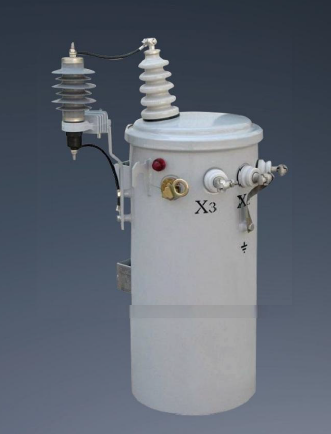
Internal engineering choices drive the manufacturing expense of the unit. Every technical specification alters the volume of raw materials required. Understanding these engineering variables allows procurement teams to optimize their requests and avoid over-specifying equipment.
Capacity and voltage requirements form the primary baseline for any quote. A linear relationship exists between capacity (kVA), primary/secondary voltage ratings, and final pricing. Higher kVA ratings require larger magnetic cores and thicker winding conductors to handle the increased current without overheating. Step-down units handle standard utility-to-consumer power delivery. These represent the bulk of manufactured units, benefiting from massive economies of scale. Step-up units require different engineering and often carry a premium. They must handle higher voltage stresses on the secondary side, requiring enhanced insulation systems. Dual-voltage, multi-tap configurations, and specialized low voltage distribution transformers also increase manufacturing complexity. Adding multiple taps allows operators to adjust the voltage ratio in the field, but requires more intricate winding processes and larger terminal blocks.
Application Type | Typical kVA Range | Common Primary Voltage |
|---|---|---|
Single-Family Residential | 10 kVA - 25 kVA | 7200V / 14400V |
Multi-Family / Light Commercial | 50 kVA - 100 kVA | 12470V / 19920V |
Heavy Industrial / Manufacturing | 167 kVA - 500 kVA | 34500V |
When sizing these units, electrical engineers must calculate continuous loads, motor starting currents, and future expansion capacity. Oversizing leads to unnecessary capital expenditure and higher no-load losses. Undersizing guarantees premature failure due to thermal degradation.
Winding materials significantly impact the budget and the physical characteristics of the unit. Manufacturers typically offer a choice between copper and aluminum conductors. Aluminum windings offer a lower initial expense. However, aluminum has lower electrical conductivity than copper. To achieve the same kVA rating, aluminum windings must be thicker, which results in a larger core window and a larger overall tank footprint. Copper windings demand a higher initial investment due to global metal market prices. However, copper provides superior conductivity. This allows for a more compact design. Copper also boasts higher mechanical strength, providing better resistance to the extreme mechanical forces generated during short-circuit events.
Technical Feature | Copper Windings | Aluminum Windings |
|---|---|---|
Initial Capital Expense | Higher Premium | More Economical |
Electrical Conductivity | Excellent | Standard |
Physical Footprint | Compact Design | Larger Tank Required |
Short-Circuit Strength | Superior Mechanical Integrity | Adequate for Standard Use |
Weight | Heavier Overall Assembly | Lighter Conductor Weight |
Cooling types and insulation further adjust the baseline manufacturing expense. Transformers generate immense heat during operation, and this heat must dissipate to prevent catastrophic insulation failure. Oil-immersed transformers serve as the standard for outdoor and utility applications. Mineral oil provides excellent dielectric strength and thermal conductivity at a reasonable expense. Dry-type transformers cost more to manufacture but remain mandatory for indoor or fire-sensitive environments. They rely on air circulation and specialized cast-resin insulation, which drives up production complexity.
Mineral oil has served as the industry standard for decades due to its proven reliability and low initial expense. However, natural ester fluids like FR3 offer significant operational advantages. FR3 possesses a fire point exceeding 300 degrees Celsius, drastically reducing fire risk in densely populated areas. Furthermore, natural esters absorb moisture generated by the degrading cellulose paper. This moisture absorption extends the lifespan of the solid insulation by up to 33 percent. While specifying ester fluids increases the initial capital outlay, the extended equipment lifespan and reduced fire mitigation requirements often justify the investment.
Legal requirements shape procurement economics heavily. Governments and utility commissions mandate strict performance standards. You cannot legally install non-compliant equipment in most jurisdictions. Understanding these regulations prevents costly project rejections by local inspectors.
Mandated efficiency standards, such as DOE 2016 in the United States, require higher-grade core steel. Manufacturers often use amorphous metal cores or high-grade grain-oriented silicon steel to meet these strict requirements. They also demand optimized winding designs to reduce resistance. These engineering upgrades increase the manufacturing expense significantly. The advanced materials minimize hysteresis and eddy current losses within the magnetic core. High-efficiency units deliver a strong return on investment despite the higher initial quote. They reduce load and no-load core losses over a 20-to-30-year lifespan. No-load losses occur constantly, 24 hours a day, simply by keeping the transformer energized. Buyers must calculate these long-term operational savings against the initial capital outlay to understand the true financial impact.
Regional and utility-specific standards also influence the final quote. Specific utility approvals can trigger custom engineering fees. Many local utilities maintain proprietary specifications for terminal layouts, bushing types, and paint colors. If your project falls within their jurisdiction, you must purchase equipment that matches their exact standards. Localized environmental regulations require specialized manufacturing modifications. Coastal installations demand stainless steel enclosures to combat salt fog corrosion. High-risk seismic zones require heavy-duty internal bracing to prevent the core and coil assembly from shifting during an earthquake. Environmentally sensitive areas might mandate strict spill containment designs or the exclusive use of biodegradable ester fluids. Each of these regional modifications adds a layer of custom engineering to the baseline unit.
Moving beyond the invoice requires understanding the true expense of deployment. The physical unit represents only one part of the financial equation. Logistics, installation, and ongoing maintenance dictate the long-term viability of the infrastructure.
Installation, rigging, and site preparation add significant variables to the project budget. Labor, crane rentals, and civil work demand careful planning. Heavy equipment mobilization requires specialized transport trailers and heavy-lift cranes. Concrete pads, trenching, or pole setting require dedicated civil engineering crews. Difficult site access can easily double or triple installation expenses. If a site sits behind existing structures, or requires road closures and traffic control, the logistical expenses skyrocket. Underground installations require deep trenching, conduit laying, and backfilling. You must coordinate multiple trades, including heavy equipment operators, concrete finishers, and high-voltage linemen, to complete the installation safely.
Executing a pad-mounted installation requires strict adherence to a sequenced civil and electrical workflow:
Excavate the site to the required depth, ensuring stable soil bearing capacity.
Install primary and secondary PVC conduit sweeps according to utility spacing requirements.
Pour a steel-reinforced concrete pad, ensuring a perfectly level surface for the enclosure.
Install grounding rings and drive copper ground rods to achieve required earth resistance.
Mobilize a crane to hoist and set the transformer onto the cured concrete pad.
Pull high-voltage primary cables and low-voltage secondary conductors through the conduit.
Terminate all connections using calibrated torque wrenches to prevent hot spots.
Maintenance, testing, and lifespan considerations dictate long-term financial planning. Routine maintenance prevents catastrophic failures. Standard protocols include annual oil sampling, visual inspections of bushings, and thermography scans to detect loose connections. Dissolved Gas Analysis (DGA) testing identifies internal arcing or paper degradation before it causes a complete outage. Under-sizing a transformer to save upfront money leads to severe consequences. Pushing a unit past its rated capacity causes continuous overheating. This thermal stress accelerates the degradation of the cellulose insulation paper. Once the paper becomes brittle, the unit loses its ability to withstand short-circuit forces, leading to premature replacement. Proper sizing ensures the unit reaches its expected 30-year lifespan.
Maintenance Task | Frequency | Purpose |
|---|---|---|
Visual Inspection | Annually | Check for oil leaks, rust, and bushing damage. |
Infrared Thermography | Annually | Identify loose connections and internal hot spots. |
Dissolved Gas Analysis (DGA) | Every 3-5 Years | Detect internal arcing, corona discharge, or paper degradation. |
Insulation Resistance Testing | Post-Fault / 5 Years | Verify the integrity of the winding insulation. |
Supply chain delays present serious financial risks to construction schedules. Current market realities dictate long lead times for custom units. Global shortages of electrical steel and copper frequently disrupt manufacturing timelines. Stock transformers ship faster but may lack specific features required by your local utility. Project delays incur heavy financial penalties, especially in commercial real estate or industrial facility commissioning. Expediting fees to rush manufacturing will drain contingency budgets rapidly. If a permanent unit faces severe delays, you may need to source temporary rental units to keep the project moving. Renting a temporary transformer, installing it, and then swapping it out later doubles the installation and rigging expenses.
Audit your facility's peak load profiles and future expansion requirements to determine the exact kVA rating needed before contacting manufacturers.
Verify all local utility specifications, including approved bushing layouts and required efficiency standards, directly with your assigned utility planner.
Secure structural engineering approvals and complete all civil site preparation, such as concrete pad pouring or pole setting, prior to scheduling equipment delivery.
Establish a dedicated contingency budget specifically for heavy rigging, crane mobilization, and specialized transport logistics.
A: The primary cost drivers include the kVA rating, winding material, and mounting configuration. Standard overhead units benefit from mass production. Units requiring custom voltage taps, specialized pad-mounted enclosures, or advanced dielectric fluids will carry a premium compared to standard off-the-shelf models.
A: Pad-mounted units generally require more robust, tamper-resistant steel enclosures for ground-level public safety. This specialized heavy-gauge housing and the associated underground wiring preparations typically make them more expensive to manufacture and install than standard overhead pole-mounted models.
A: You should specify a platform mount when the transformer's weight or physical size exceeds the safe load-bearing capacity of a single utility pole. High-capacity units often require this reinforced structural support to ensure long-term stability against wind and gravity.
A: Yes. Standard step-down distribution units benefit from massive economies of scale in manufacturing. Specialized step-up units require custom engineering, enhanced insulation systems, and different winding configurations, which generally increases the overall manufacturing expense.
A: Standard stock units can often ship within a few weeks if they match common utility specifications. However, custom-engineered models with specific voltage requirements, unique footprints, or specialized dielectric fluids can extend lead times significantly. Always verify current supply chain conditions.
A: Reconditioned units can be safe if they undergo rigorous testing to meet standard electrical codes. You must verify the testing protocols and secure a comprehensive factory warranty. They serve well for temporary power but carry slightly higher long-term reliability risks than brand new units.

