


Views: 0 Author: Site Editor Publish Time: 2026-09-01 Origin: Site


Selecting the right electrical infrastructure determines facility safety, load distribution, and long-term power stability. A critical choice engineers face is whether to specify a Delta or Wye connection for a 3 phase transformer. Misaligning the connection type with your facility's load profile invites grounding failures. It can also cause harmonic overheating and trigger severe code violations.
Modern commercial grids demand precise power delivery. Unfortunately, using the wrong configuration can destabilize an entire electrical network. We built this guide to provide electrical engineers and procurement teams an objective framework. It will help you evaluate and specify the correct transformer configuration.
You will learn the core mechanical differences between Delta and Wye. We will explore how different loads dictate connection choices. Finally, you will discover the specific sizing implications for large-scale systems to ensure safe, reliable operations.
Delta Connections (3-Wire): Ideal for heavy industrial, balanced motor loads where a neutral is unnecessary; offers operational continuity (open-delta) under certain single-phase faults.
Wye Connections (4-Wire): Features a central neutral point, allowing for dual-voltage output (e.g., 480V/277V) and simplified, safer system grounding.
Industry Standard: The Delta-Wye configuration (Delta primary, Wye secondary) is the most common commercial solution, offering the high-voltage transmission benefits of Delta with the flexible, grounded distribution of Wye.
Sizing Impact: As capacity scales from 500 kVA to 2500 kVA, grounding strategies, harmonic mitigation, and fault current handling dictate connection choices.
Understanding the internal wiring of a transformer requires analyzing its vector geometry. The physical arrangement of the coils dictates how power flows. It also determines how voltages and currents behave across the phases. We evaluate these mechanics through two primary configurations.
Engineers arrange a Delta configuration in a closed loop. The schematic resembles a triangle. The end of one winding connects directly to the start of the next winding.
Mathematical Relationship: In a Delta system, the line voltage equals the phase voltage (VL = VP). However, the line current equals the square root of 3 (approximately 1.732) times the phase current.
Neutral Absence: This setup lacks a common neutral point. It operates strictly as a 3-wire system.
Primary Applications: You will typically use Delta for primary transmission lines. It also perfectly supports purely 3-phase loads, like large industrial motors.
A Wye configuration looks like the letter "Y" or a star. All three phase windings connect together at a single common center point. This center point serves as the neutral.
Mathematical Relationship: In a Wye system, the line current equals the phase current (IL = IP). The line voltage equals the square root of 3 times the phase voltage.
Neutral Presence: The central connection provides a physical neutral wire. This turns it into a 4-wire system.
Primary Applications: Wye supports both 3-phase and single-phase loads simultaneously. You can tap between a phase and the neutral to power standard single-phase equipment.
Table 1: Mathematical Comparison of Delta and Wye Connections
Parameter | Delta Connection | Wye Connection |
|---|---|---|
Wiring Structure | Closed loop (Triangle) | Common center point (Star) |
Voltage Relationship | Line Voltage = Phase Voltage | Line Voltage = Phase Voltage × √3 |
Current Relationship | Line Current = Phase Current × √3 | Line Current = Phase Current |
Neutral Wire | Not present | Present (at the center) |
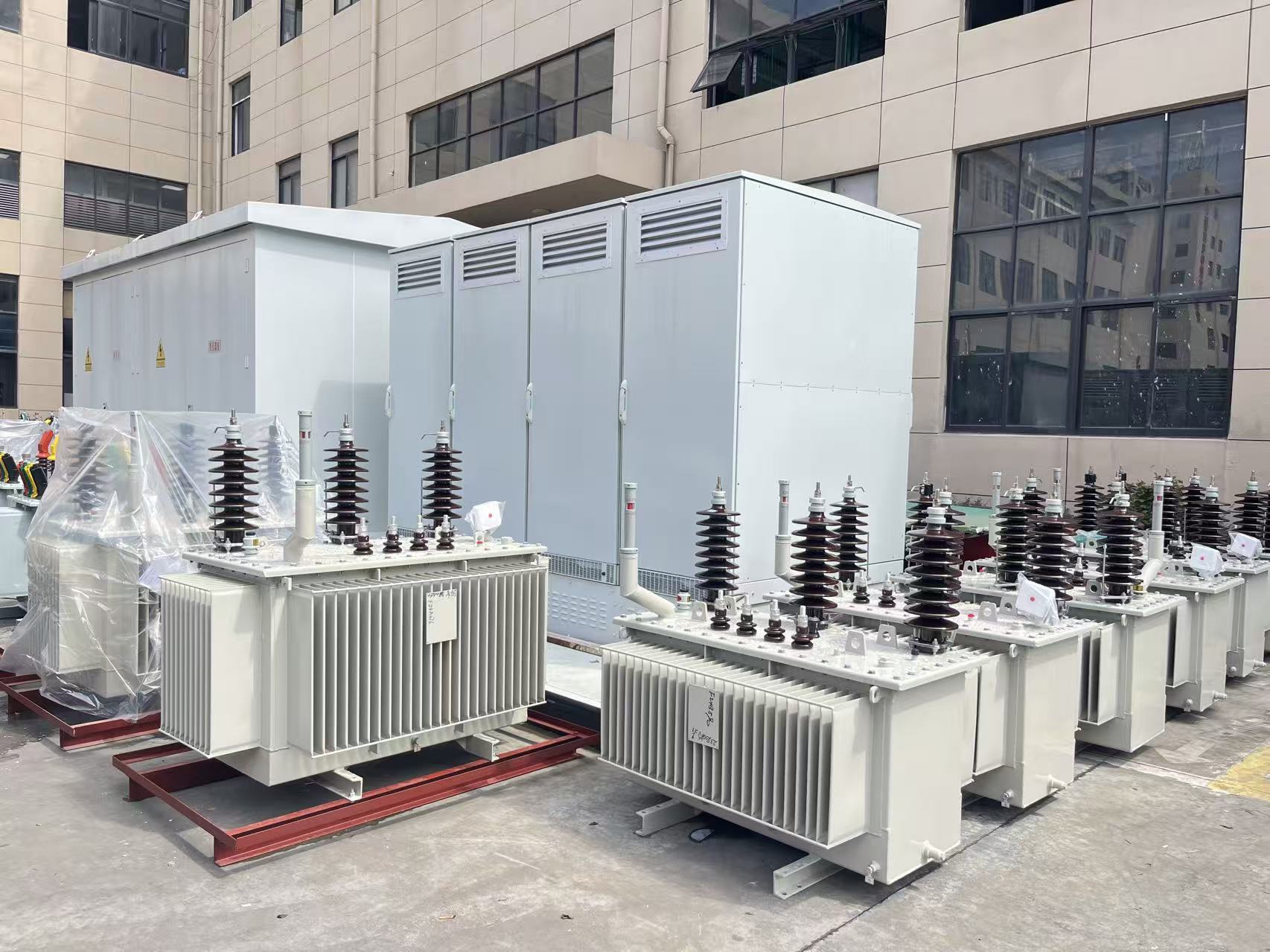
Selecting the right configuration requires more than basic math. You must evaluate the physical demands of your facility. Load types, grounding philosophies, and harmonic distortion levels heavily influence the final design.
Your facility's load profile dictates the required wiring configuration. Industrial environments behave differently than commercial office buildings.
You should specify Delta for isolated, heavily balanced loads. Examples include large industrial pumps, manufacturing motors, and heavy heating elements. These machines do not need a neutral wire to operate. They draw power equally across all three phases.
Conversely, specify Wye for commercial facilities and data centers. These environments require mixed 3-phase equipment and single-phase lighting or receptacles. A Wye secondary allows you to run 480V 3-phase HVAC units while simultaneously powering 277V single-phase lighting circuits.
Grounding strategies directly impact personnel safety and equipment lifespan. You must manage transient overvoltages carefully.
Wye systems provide a solid ground point at the neutral star. This limits transient overvoltages during lightning strikes or switching events. It also drastically simplifies ground-fault detection. When a fault occurs, the system immediately trips the breaker. This ensures rapid isolation of the dangerous circuit.
Delta systems are inherently ungrounded. They offer high reliability because a single ground fault will not immediately trip the system. However, they require specialized grounding transformers. Engineers often use a zig-zag transformer to establish a reference ground. Alternatively, you must install advanced ground-fault indicator systems to ensure safety.
Modern electrical loads introduce significant harmonic distortion. Computers, LED lighting, and variable frequency drives generate non-linear currents.
You must address the risk of triplen harmonics on the neutral wire. Triplen harmonics are multiples of the third harmonic (3rd, 9th, 15th). In Wye systems, these harmonics do not cancel out. Instead, they add together on the neutral conductor. This causes dangerous overheating.
A Delta primary offers a powerful solution. The closed loop of the Delta winding traps these triplen harmonics. It circulates them within the triangle. This prevents the distortion from feeding back into the utility grid. This harmonic trapping makes the Delta-Wye configuration incredibly popular.
Capacity constraints heavily influence connection specifications. As your power demands grow, the physical characteristics of the transformer change. You must scale your grounding and protection strategies accordingly.
Distribution at the 500 kVA Level
A 500 kVA three phase transformer is common for localized building distribution. Engineers typically specify this unit as a Delta-Wye. It steps down incoming utility voltage to a usable 480Y/277V or 208Y/120V. This dual-voltage capability is perfect for mixed commercial use. At this size, standard commercial grounding practices apply easily.
Scaling to the 1000 kVA Level
A 1000 kVA three phase transformer represents a standard capacity for mid-sized manufacturing. It also powers large institutional plants. Here, the decision point becomes critical. A Wye secondary is vital to handle unbalanced loads. Without a grounded neutral, severe voltage fluctuations could damage sensitive equipment across the phases. You must ensure the neutral bus is robust.
Heavy Infrastructure at the 2500 kVA Level
A 2500 kVA three phase transformer supports heavy industrial sites. They power large data centers and grid-tied solar applications. At this scale, your evaluation must factor in high fault-current ratings. A fault here releases massive energy. You need extensive neutral bus sizing. You might also face potential requirements for Delta-Delta configurations. This occurs frequently in legacy industrial motor applications where continuous uptime is paramount.
Theoretical designs must survive real-world installation. Physical wiring routing, code compliance, and maintenance procedures dictate project success. You must consider National Electrical Code (NEC) requirements closely.
Wye configurations require a 4th wire to serve as the neutral. Routing a 4-wire system over long distances increases material requirements. You need larger conduit and more physical space. Copper is heavy and difficult to pull through complex building infrastructure.
Delta systems operate on just 3 wires. This reduces the sheer volume of copper you must route through a facility. For long transmission runs between industrial substations, a 3-wire Delta system simplifies the physical installation significantly.
You cannot simply use a small neutral wire to save space. The NEC mandates strict sizing rules for Wye systems. When heavy non-linear loads are present, the neutral carries severe harmonic currents.
The NEC requires engineers to up-size the neutral conductor in these environments. In data centers filled with servers, the neutral current can exceed the phase current. You may need to specify a neutral rated for 150% or even 200% of the phase conductors. Ignoring this rule risks catastrophic wire fires.
Operational realities differ wildly between grounded and ungrounded systems. Maintenance teams face different challenges based on your design choice.
Locating ground faults on an ungrounded Delta system is notoriously difficult. A single fault does not trip a breaker. The system keeps running. However, maintenance crews must use specialized pulsing equipment to hunt down the fault. It requires advanced training and significant labor hours.
Conversely, solidly grounded Wye systems offer immediate feedback. If a phase shorts to ground, the breaker trips instantly. The localized trip makes it easy for maintenance teams to find the problem. It isolates the danger quickly, ensuring personnel safety.
Choosing the right configuration comes down to matching the electrical supply to the physical load. We developed a clear logic framework to guide your specification process.
Chart 1: Transformer Connection Selection Guide
Connection Type | When to Specify This Configuration | Primary Benefit |
|---|---|---|
Delta-Wye | Stepping down utility power for modern buildings with mixed lighting, HVAC, and server loads. | Traps primary harmonics while providing a safe, grounded neutral for secondary loads. |
Delta-Delta | Integrating into legacy industrial facilities strictly utilizing 3-wire systems for continuous processes. | Maintains operation during a single ground fault (maximum uptime). |
Wye-Wye | Requiring specific utility-side grounding synchronization (rare utility distribution networks). | Eliminates phase shifts between primary and secondary. |
Use Delta-Wye if: You are feeding a modern commercial building. You need dual voltages (like 480V and 277V) and want to trap utility-side harmonics.
Use Delta-Delta if: You operate continuous manufacturing. You cannot afford a shutdown from a single ground fault. Your loads are strictly 3-phase ungrounded motors.
Use Wye-Wye if: The local utility mandates it for grid synchronization. Be aware of the risks. Wye-Wye allows harmonics to propagate freely between the primary and secondary sides.
Before engaging vendors, you must define your technical data. Gather the required input and output voltages. Calculate the exact kVA required for your facility. Determine your expected load imbalance percentage. Finally, specify the K-factor requirements if you anticipate heavy harmonic loads. Having these numbers ready ensures you receive accurate engineering proposals.
Neither connection type is inherently superior to the other. Delta and Wye configurations solve entirely different physical and compliance problems. Your facility's unique load profile must drive the engineering decision.
Delta-Wye remains the default choice for 90% of commercial step-down applications. It perfectly balances utility-side harmonic trapping with secondary-side grounding safety. However, legacy heavy industrial loads and specific continuous-uptime philosophies may dictate a Delta-Delta alternative. Always prioritize personnel safety and NEC code compliance when making your final selection.
Do not finalize your transformer procurement based on assumptions. Consult with a qualified application engineer to thoroughly review your facility's single-line diagrams. Ensuring your infrastructure matches your daily operational demands will secure your power stability for decades.
A: Yes, it is common and highly practical. A Delta-Wye transformer connects a 3-wire ungrounded supply (Delta) to a 4-wire grounded load (Wye). The primary side receives the 3-phase utility power without a neutral. The secondary side establishes a new neutral point, allowing you to serve mixed single-phase and 3-phase loads safely.
A: Delta-Wye dominates commercial applications because it offers the best of both worlds. The Delta primary successfully traps triplen harmonics, preventing them from destabilizing the power grid. Meanwhile, the Wye secondary provides a solid ground reference and a neutral wire. This allows a single unit to deliver dual-voltage capabilities.
A: On an ungrounded Delta system, a single ground fault will not trigger a breaker trip. The system continues operating, which is great for industrial uptime. However, the voltage on the unfaulted phases rises significantly. If a second ground fault occurs on another phase, it creates a massive short circuit, risking severe equipment damage.
A: No, a standard Delta connection does not require a neutral wire. It relies entirely on three active phase conductors. This reduces the amount of physical copper required for installation. However, lacking a neutral removes your ability to serve standard single-phase loads directly from that specific connection.

