


Views: 0 Author: Site Editor Publish Time: 2026-09-30 Origin: Site


You rely on mobile power for road trips, off-grid cabins, or mobile workstations. Converting 12V DC power to 240V AC is essential for standard appliances. Evaluating the price of a 12V to 240V power converter requires looking past the initial price tag. While budget models flood major e-commerce platforms, long-term viability hinges on waveform quality, continuous power capacity, and safety circuitry. Underspending can lead to damaged appliances, blown vehicle fuses, or drained battery banks.
This guide breaks down the pricing tiers for consumer-level units. We detail the hidden risks of cheap models. You will also learn how costs scale for heavy-duty industrial applications. By the end, you can confidently select the right equipment for your specific electrical needs without overspending on unnecessary features.
Consumer Price Ranges: Reliable 12V to 240V step-up transformers range from $30 for basic 150W adapters to $500+ for heavy-duty 3000W+ pure sine wave units.
The Waveform Premium: Pure Sine Wave (PSW) models cost 30% to 100% more than Modified Sine Wave (MSW) models but are mandatory for sensitive electronics, medical CPAP machines, and modern appliances.
Implementation Limits: Units priced for cigarette lighter usage strictly max out at 150W–300W due to vehicle fuse limitations; higher wattage demands direct-to-battery wiring.
Industrial Scaling: Moving from mobile/off-grid power to commercial utility requires AC-to-AC industrial units, where a 630 kVA step up transformer acts as a baseline, and units up to a 4000 kVA step up transformer require customized capital expenditure.
Understanding what dictates the price of a reliable step up transformer helps you avoid marketing gimmicks. Manufacturers base their pricing on several internal components. These components determine how cleanly and safely the unit delivers power to your devices.
The type of electrical wave produced is the largest price differentiator. You will encounter two main options on the market.
Modified Sine Wave (MSW): These units are cheaper to manufacture. They produce a "blocky" electrical wave. Engineers design them using simpler switching mechanisms. MSW is sufficient for basic heating elements or older brush motors. However, they cause issues for modern electronics.
Pure Sine Wave (PSW): These command a higher price point due to complex internal filtering. They replicate standard grid power exactly. The smooth electrical curve is crucial for laptops, variable speed tools, and audio equipment. Microprocessors demand this clean power to function properly.
Budget manufacturers often advertise "Peak" or "Surge" wattage in the product title. They use this tactic to make the unit seem more powerful. Legitimate pricing is based on continuous wattage. Continuous wattage refers to the power it can sustain indefinitely without overheating. Always base your purchasing decisions on the continuous rating. A unit claiming 2000W peak might only handle 1000W continuously.
Converting DC to AC generates significant heat. Premium units utilize extruded aluminum housings for passive cooling. They feature smart cooling fans. These fans activate only under heavy loads to reduce noise. High-density copper internal windings also increase the price. Cheap units use thinner wire. Thinner wire creates more resistance and heat, lowering overall efficiency.
Proper testing is expensive. UL (Underwriters Laboratories), CE, and FCC compliance add to the manufacturing cost. However, these labels provide verifiable fire and electrical protection. Uncertified models pose serious fire hazards. They skip essential isolation barriers between the high-voltage and low-voltage sections.
Best Practice: Always check the product label for recognized safety marks. Avoid generic brands lacking independent laboratory testing.
The consumer market divides neatly into three primary tiers. Your specific application dictates which tier you should target.
These are compact units meant for casual travel. They plug directly into your vehicle dashboard.
Capacity: 100W to 300W.
Features: Mostly MSW technology. They plug directly into a 12V cigarette lighter socket. They usually include USB charging ports for convenience.
Best For: Charging phones, powering basic laptops, or running low-draw LED lights in a car.
This bracket offers more robust solutions for outdoor enthusiasts. You must connect them directly to your battery.
Capacity: 500W to 1500W.
Features: You will find a mix of high-end MSW and entry-level PSW models here. They require direct alligator clips or ring terminals. Most include basic overload protection circuits.
Best For: Running small power tools, camping refrigerators, and medical CPAP machines.
These units serve as permanent installations. They provide grid-quality power for demanding environments.
Capacity: 2000W to 4000W+.
Features: High-efficiency PSW is standard. They feature hardwire terminal blocks for secure connections. Many offer remote control switches and LCD monitoring screens. Multi-stage protection (thermal, over/under voltage) is built-in.
Best For: RV living, mobile workshops, and off-grid cabin setups running microwaves or air conditioners.
Table 1: Consumer Cost Brackets Overview
Price Tier | Capacity Range | Waveform Output | Primary Application | Connection Type |
|---|---|---|---|---|
Entry-Level ($20-$50) | 100W - 300W | Mostly MSW | Phone/Laptop charging | Cigarette Lighter |
Mid-Range ($50-$200) | 500W - 1500W | Mixed (MSW/PSW) | Camping, CPAP, Tools | Battery Terminals |
Premium ($200-$600+) | 2000W - 4000W+ | Strictly PSW | Off-Grid, RV Appliances | Hardwired Blocks |
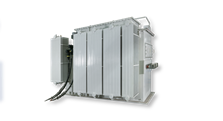
While 12V to 240V units cover DC-to-AC mobile needs, commercial scaling requires different hardware. Commercial facilities shift into high-voltage AC-to-AC infrastructure. Pricing at this tier moves away from retail costs. Instead, buyers receive commercial quotes based on copper commodities, cooling methods, and localized grid compliance.
For medium-scale projects, a 630 kVA step up transformer acts as a reliable baseline. Engineers frequently specify this size for localized industrial distribution. It is widely used in medium-scale solar farms. Pricing depends heavily on the construction style. Dry-type models are cheaper and suited for indoor use. Oil-filled units demand a premium but withstand harsh outdoor weather conditions.
Heavy manufacturing plants and data centers require far more capacity. Here, a 2000 kVA step up transformer becomes the standard. Costs at this level scale significantly. Manufacturers customize these units for specific grid demands. Pricing variables include required impedance levels and custom winding configurations. Integrated switchgear requirements also drive up the initial capital expenditure.
At the highest tier of private infrastructure, utility-grade equipment takes over. Deploying a 4000 kVA step up transformer involves complex financial planning. The unit price represents only a fraction of the total installation cost. Buyers must evaluate logistical shipping weights. They need specialized rigging teams for installation. Rigorous environmental compliance testing also adds to the upfront financial commitment.
Saving money upfront often leads to expensive consequences later. Low-tier electrical converters carry hidden risks. You must evaluate these risks before purchasing a budget unit.
Modern electronics rely on clean, curved electrical signals. Running them on cheap, modified sine wave transformers is dangerous. The "blocky" power causes power supplies to run extremely hot. This excess heat significantly shortens the lifespan of your devices. Sensitive motors in fans or refrigerators will buzz loudly. Over time, these motors can burn out completely.
Many consumers misunderstand vehicle wiring limits. Attempting to pull 500W through a cheap unit plugged into a cigarette lighter is a major mistake. The vehicle’s 15A or 20A fuse will blow immediately. In older vehicles, you risk melting the wiring harness. Replacing a burnt vehicle wiring harness costs hundreds of dollars.
Common Mistake: Never run a device pulling more than 150 continuous watts through a standard 12V dashboard socket. Always wire directly to the battery for heavier loads.
Low-cost units often feature poor standby efficiency. They consume power even when you are not using them. If left connected but switched off, they drain the battery silently. They can pull a 12V lead-acid or lithium battery below safe voltage thresholds. Deeply discharging a battery ruins the internal cells permanently.
Choosing the correct model requires basic electrical math. Follow this sequential framework to properly size your equipment.
Audit Your Load (Continuous + Surge): Start by tallying the running wattage of all devices. List the devices you will use simultaneously. Add these numbers together. Multiply this total by 1.2. This provides a safe 20% operating margin.
Account for Inductive Loads: Identify any devices containing motors or compressors. Refrigerators and air conditioners are inductive loads. Be aware they require a massive startup surge. This surge is often 2x to 3x their stated running wattage. Ensure your chosen unit's peak rating accommodates this temporary spike.
Verify Protection Circuitry: Do not shortlist any unit lacking explicit safety documentation. You must verify three specific features. First, look for a low-voltage disconnect (LVD) to save your battery. Second, confirm over-voltage protection. Finally, ensure it has short-circuit and reverse polarity protection. Units featuring replaceable external fuses offer the best long-term value.
Purchasing a 12V to 240V step up transformer requires matching your budget directly to your application's risk tolerance. While a cheap adapter suffices for a brief road trip, permanent off-grid installations demand premium equipment.
Action Steps for Buyers:
Calculate your exact continuous wattage needs before browsing products.
Invest in Pure Sine Wave technology if you plan to run laptops, medical devices, or variable-speed motors.
Upgrade your wiring. Use heavy-gauge cables wired directly to your battery for anything exceeding 300 watts.
Verify independent safety certifications (UL, CE) on the physical product label.
By accurately mapping your surge loads and refusing to compromise on integrated safety circuits, you prevent equipment failure. This careful approach guarantees reliable, clean power for your essential devices.
A: Yes. In consumer electronics, taking 12V Direct Current (DC) from a battery and stepping it up to 240V Alternating Current (AC) is technically called power inversion. The terms are used interchangeably in retail.
A: Yes. If the vehicle engine is not running, the alternator cannot recharge the battery. A heavy electrical load will rapidly deplete a standard 12V starter battery. This depletion often happens within hours or minutes, depending on the appliance.
A: It requires complex internal filtering capacitors and inductors. These components smooth the electrical output into a clean, curved wave identical to grid power. This prevents damage to sensitive microprocessors and allows motors to run quietly and efficiently.

