


Views: 0 Author: Site Editor Publish Time: 2026-05-19 Origin: Site


Environmental control carries high stakes for commercial operations. A single percentage point of humidity deviation can easily ruin sensitive lab batches. A delayed temperature response might result in localized electrostatic discharge (ESD) damage or severely compromise agricultural yields. These risks make precise environmental management absolutely critical.
While off-the-shelf devices serve basic consumer needs perfectly, they fall short for complex commercial environments. Scaling commercial operations or building proprietary hardware requires a capable OEM partner. Standard retail units frequently fail regarding seamless system integration, strict regulatory compliance, and long-term hardware longevity.
This guide outlines the technical and commercial criteria for evaluating an OEM partner. We move past superficial marketing claims to focus entirely on actual hardware reliability, intelligent automation, and measurable operational success. You will learn how to identify vendors who protect your intellectual property and deliver consistent, resilient environmental control solutions.
Customization Drives ROI: OEM partnerships allow for tailored control logic (like PID algorithms and VPD tracking) that directly reduces operational downtime and energy waste.
Hardware Resilience Matters: Selecting an OEM requires auditing their component quality, specifically regarding sensor drift, probe durability, and overload protection.
Compliance is Non-Negotiable: For regulated industries, controllers must support verifiable calibration (e.g., NIST traceability) and data logging for GxP/FDA standards.
Integration Realities: An Intelligent Temperature and Humidity Controller must flawlessly recover from power outages and seamlessly handshake with existing third-party peripherals.
Relying on standard retail controllers often creates a severe scalability bottleneck. Most consumer-grade devices operate within closed ecosystems. They force users to monitor readouts across fragmented platforms. You cannot easily pull this data into a central dashboard. This fragmentation prevents companies from scaling operations efficiently. A dedicated OEM partner solves this problem by engineering open-protocol hardware. They ensure your new hardware integrates flawlessly into your existing monitoring software.
Protecting your intellectual property represents another major advantage of OEM partnerships. When you build proprietary environmental systems, you want to maintain a distinct competitive edge. Standard devices leave your system architecture visible to competitors. Custom OEM engineering allows for deep white-labeling. You can mask the underlying control logic and rebrand the physical interfaces. This ensures competitors cannot easily replicate your success.
We can summarize the fundamental differences using the comparison chart below.
Feature Category | Standard Off-the-Shelf Unit | Custom OEM Solution |
|---|---|---|
System Scalability | Fragmented; relies on closed vendor apps. | Centralized; supports open API and industrial protocols. |
IP Protection | None; easily identifiable and replicable. | High; fully white-labeled physical and digital interfaces. |
Hardware Customization | Fixed features and standard casing. | Adaptable DIN sizes, custom relays, and specific sensors. |
Decision-makers must clearly understand the difference between precision and accuracy. Precision refers to consistency and repeatability. If a sensor reads 50% relative humidity five times in a row, it is precise. Accuracy refers to closeness to the true, calibrated value. If the actual humidity is 55%, the precise sensor mentioned above is highly inaccurate. A high-quality OEM must guarantee tight tolerances on both metrics simultaneously.
Advanced control logic separates basic limiters from professional gear. Many basic units use binary "On/Off" limiters. These trigger equipment only when limits are breached, which causes massive system overshoot. You should evaluate the OEM’s capability to provide Proportional-Integral-Derivative (PID) algorithms. PID controllers monitor environments with fluctuating loads. They apply proportional force to correct errors, integral math to fix steady-state gaps, and derivative logic to brake before overshooting the target.
Modern applications require an Intelligent Temperature And Humidity Controller to move beyond flat relative humidity (RH) numbers. Agricultural and greenhouse environments demand Vapor Pressure Deficit (VPD) tracking. VPD measures the exact drying power of the air. It provides a much clearer picture of plant transpiration than simple RH percentages. You need an OEM capable of programming complex metric calculations directly into the firmware.
Peripheral compatibility addresses common field failures. You must assess how the OEM handles power-loss states. Basic controllers often fail to re-engage digital dehumidifiers or fans after a blackout. They require physical knob resets. Intelligent units store equipment states in non-volatile memory. They automatically negotiate handshakes with third-party peripherals to resume operations the second power returns.
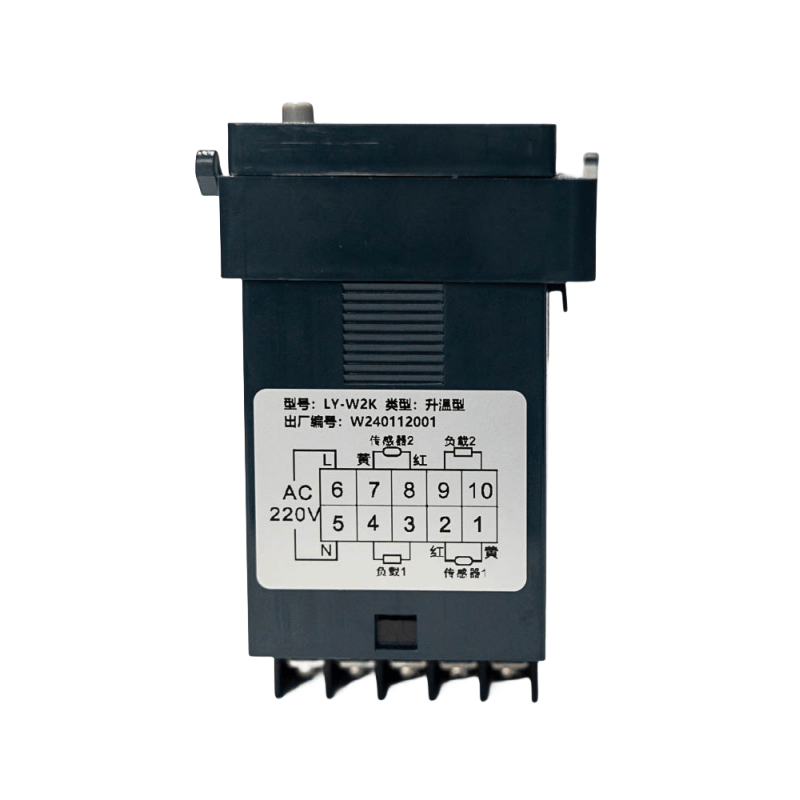
When deploying a Temperature And Humidity Controller in pharmaceutical or laboratory environments, regulatory compliance dictates every decision. The OEM must support strict data logging to meet GxP and ISO compliance standards. Auditors require undeniable proof of environmental stability. You must ensure the manufacturer provides sensors with documented, traceable calibration. NIST (National Institute of Standards and Technology) traceability serves as the gold standard here.
Data centers and electronics testing facilities face entirely different threats. Here, electrostatic discharge (ESD) mitigation is the primary concern. OEMs must design systems capable of maintaining strict lower-bound humidity thresholds. Dropping below 40% RH dramatically increases the risk of catastrophic electrostatic discharge. Workers walking across a dry room can generate enough static to fry expensive servers instantly. If you must operate below this threshold, the OEM should help integrate the system with specific ESD-safe flooring sensors.
Commercial agriculture and storage facilities demand ruggedized hardware. High-moisture environments easily overwhelm standard sensors. Water vapor condenses on the delicate reading elements. This condensation blinds the sensor and forces erratic behavior. You must evaluate the OEM’s ability to engineer specialized microchip filters. These protective layers prevent moisture blinding while still allowing accurate air sampling.
Always request sample data logs to verify FDA/GxP export formatting.
Demand low-humidity fail-safes for server room applications to prevent sudden ESD events.
Inspect the physical protective mesh on agricultural sensors for condensation resistance.
Environmental control systems rarely fail smoothly. They typically degrade over time or break during critical load periods. Understanding these implementation risks helps you vet potential partners effectively.
The Inevitability of Sensor Drift: All sensors drift over time. This is a hard engineering truth. Continuous exposure to chemical fumes, dust, and microscopic contaminants alters sensor baselines. The true evaluation criterion is not whether a sensor drifts, but whether it is calibratable. Many cheap digital sensors require complete replacement. You must select an OEM offering field-calibratable probes.
Hardware Burnout Under Load: Continuous high-amperage cycles generate immense heat. Basic relays often stick closed. Electronic fuses (e-fuses) frequently blow under heavy starting surges from industrial compressors. You must highlight this risk during vendor audits. Assess the OEM's historical track record in utilizing robust, industrial-grade solid-state relays.
Latency and Polling Rates: Slow response times destroy sensitive materials. Some OEM designs feature polling rates with over five minutes of latency. A lot of damage occurs in five minutes. Sensitive biopharmaceuticals can degrade before the system even triggers a cooling response. Demand latency rates measured in seconds.
Common mistakes occur when buyers ignore these hidden risks. They purchase units based solely on initial spec sheets. Always ask vendors about their component degradation curves. Knowing exactly when a probe will likely fail allows you to schedule preventative maintenance.
Sourcing a reliable Temperature And Humidity Controller requires a structured auditing process. You must look beyond standard sales pitches. Demand raw historical data on hardware failure rates. Ask prospective OEMs for their exact warranty claim percentages over the last three years. Honest partners share these metrics willingly. They use failure data to improve their next hardware iterations.
You also need to assess their customization and R&D agility. Standard panel cutouts vary across industries. Your OEM must possess the capacity to modify physical dimensions easily. Furthermore, they need strong communication protocol expertise to fit your existing infrastructure.
DIN Standard | Front Panel Dimensions (mm) | Typical Application |
|---|---|---|
1/32 DIN | 24 x 48 | Compact handheld or tight panel spaces. |
1/16 DIN | 48 x 48 | Standard industrial automation panels. |
1/8 DIN | 48 x 96 | Complex readouts requiring dual-display screens. |
Finally, evaluate their technical support and supply chain resilience. A brilliant controller provides no value if you cannot procure it during a supply crunch. Investigate their geographic manufacturing footprint. Test their turnaround time for technical troubleshooting. Send a complex integration question to their support team and measure how long it takes to receive an engineering-level answer.
Sourcing an industrial environmental controller is never a commodity purchase. It represents a highly strategic integration decision. The hardware you choose directly impacts product safety, regulatory standing, and daily operational efficiency. Standard retail options cannot deliver the custom logic, resilient relays, or IP protection necessary for serious commercial scale.
We advise technical buyers to take immediate action. First, request functional pilot units from your shortlisted vendors. Second, demand verifiable calibration certificates to ensure NIST compliance. Finally, thoroughly stress-test the OEM's API and protocol documentation before signing any manufacturing agreement. Rigorous upfront testing guarantees your environmental systems will perform flawlessly under pressure.
A: An open-loop controller operates without feedback, applying continuous heating or cooling regardless of the outcome. A closed-loop controller uses continuous sensor feedback for self-correction. It constantly adjusts its output based on real-time environmental changes. Closed-loop systems are absolutely mandatory for precise commercial applications.
A: Many basic digital sensors cannot be calibrated in the field. Once they drift due to contaminant exposure, they must be discarded. However, premium industrial sensors are designed differently. You must explicitly ask your OEM for calibratable models to avoid expensive full-unit replacements.
A: This happens due to incompatibility between digital-panel peripherals and basic power-cut controllers. When power returns, digital humidifiers remain in a standby state waiting for a physical button press. Premium OEM controllers solve this through smart logic integrations and non-volatile memory, automatically re-engaging external devices.
A: Critical commercial environments require response times measured in seconds, not minutes. Acceptable latency should ideally fall under 30 seconds. Delays exceeding five minutes can lead to severe temperature overshoots or batch spoilage in sensitive pharmaceutical and agricultural settings.

