


Views: 0 Author: Site Editor Publish Time: 2026-05-08 Origin: Site


The shift toward decentralized power generation demands highly efficient, localized voltage regulation. Renewable energy grids and rural electrification projects require constant optimization to remain viable. Grid planners and procurement engineers face a massive challenge here. They must balance upfront infrastructure costs against long-term reliability. Strict thermal management requirements complicate this further.
We introduce the single phase oil immersed transformer as the optimal, high-efficiency solution. These units handle specialized load distributions exceptionally well. Modern network nodes present harsh conditions daily. Space limitations, load optimization, and rugged outdoor performance remain non-negotiable. Engineers need equipment specifically engineered for extreme resilience. By leveraging advanced dielectric fluids, these units deliver unmatched stability.
We will explore their core engineering and strategic advantages below. You will learn how they outperform conventional alternatives. We will also cover essential sourcing specifications and predictive maintenance frameworks. This guide equips you to make precise, data-backed procurement decisions.
Efficiency & Lifespan: Offers up to 99% operational efficiency and a lifespan of 25–40 years, significantly outperforming dry-type alternatives.
Cost-to-Performance Ratio: Typically requires ~50% of the initial capital expenditure of equivalent dry-type units while supporting higher voltage thresholds.
Strategic Applications: Uniquely suited for renewable energy integration (solar/wind step-downs) and low-density residential or industrial distribution.
Maintenance Realities: Relies on mature predictive maintenance frameworks, such as Dissolved Gas Analysis (DGA), to safely manage oil acidification and thermal risks.
Modern grids struggle heavily with transmission losses over long distances. In many vast networks, up to 8% of total generation simply disappears during transit. Pushing power across hundreds of miles creates massive inefficiencies. We must localize power distribution to solve this. Decentralized generation requires equipment placed much closer to the end user. This cuts down transit distance and preserves electrical energy.
Why should you choose a single-phase unit? The architectural advantage becomes clear in specific, localized deployments. Consider rural networks or independent solar farm arrays. Over-engineering these sites using bulky three-phase systems wastes capital. A single-phase setup provides exact voltage regulation without unnecessary hardware. You deploy exactly what the specific node requires. This targeted approach prevents over-spending on excess capacity.
Several key outcomes drive this strategic business case:
Lightweight footprint: Engineers can install these compact units on standard poles or small ground pads. They require minimal structural reinforcement.
Precise voltage step-down capabilities: They step down high transmission voltages to usable residential or localized industrial levels accurately.
Minimized no-load grid losses: During partial-capacity operations, these units remain highly efficient. They prevent wasteful energy bleeding when demand drops.
The secret to achieving 99% efficiency lies inside the tank. A dual-function dielectric fluid dictates the internal performance. Mineral or biodegradable insulating oil acts simultaneously as a high-grade electrical insulator and an efficient coolant. The fluid completely envelops the active components. It prevents electrical short circuits while absorbing intense operational heat. As the oil heats up, it circulates naturally. This convection pulls heat away from the core.
Thermal management thresholds represent a strict engineering standard. You must maintain operational temperatures below 85°C. A 30°C daily average serves as the ideal benchmark. Exceeding these limits causes severe insulation degradation. The paper wrapping the coils becomes brittle. The fluid itself begins to acidify faster. Keeping the unit cool guarantees decades of uninterrupted service.
Let us briefly map the structural anatomy. These specific features enable high-load performance:
Silicon steel core: Engineers use laminated silicon steel to build the core. This material significantly reduces magnetic hysteresis losses during voltage conversion.
Copper/aluminum windings: These conductive coils sit fully submerged. The surrounding oil bath protects them from moisture and electrical arcing.
Radiators and bushings: Radiators provide optimal surface-area cooling. Bushings ensure safe, insulated external circuit connections to the wider grid.
When specified correctly, an oil immersed transformer perfectly balances these physical components. It operates silently while handling immense electrical stress.
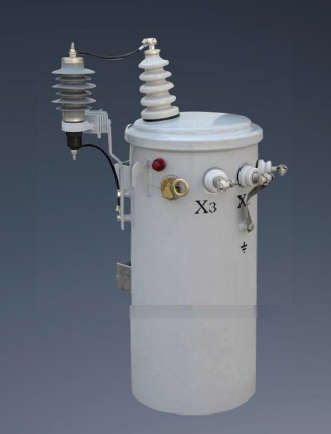
Procurement teams constantly evaluate different transformer technologies. Comparing oil-filled units against dry-type models requires a clear framework. Capital expenditure (CapEx) heavily influences initial decisions. An oil-filled unit traditionally costs roughly half the price of a similarly rated dry-type model. This massive upfront saving allows grid developers to stretch their budgets. You can electrify larger rural areas for the same capital investment.
Lifecycle and durability determine long-term operational success. We compare the 25–40 year average lifespan of oil-filled units against the 15–25 year cap of dry-type models. The fluid inside the tank constantly cools the active parts. This prevents the rapid physical degradation seen in air-cooled resin units. The extended lifespan dramatically reduces replacement frequency.
Voltage and load limits also divide these two technologies. Dry-type transformers generally face operational ceilings around 35kV. Beyond this threshold, managing heat via air cooling becomes nearly impossible. Oil-immersed variants safely process much higher transmission voltages. They manage near-full loads without suffering from thermal throttling.
Environmental suitability provides the final deciding factor. Outdoor resilience matters. Dry-type units often require protective enclosures when placed outside. Conversely, oil-filled units are intrinsically protected against high humidity, thick dust, and weather extremes. Their sealed steel tanks block all external contaminants.
Evaluation Metric | Oil Immersed Transformers | Dry-Type Transformers |
|---|---|---|
Capital Expenditure | Lower initial cost (~50% less) | Higher initial cost |
Expected Lifespan | 25–40 years | 15–25 years |
Voltage Limits | Handles well above 35kV safely | Operational ceiling around 35kV |
Environmental Resilience | Excellent outdoor suitability (sealed tank) | Requires robust indoor enclosures |
Capacity and sizing determine project viability. Buyers must evaluate kVA ratings carefully. These ratings frequently start at 5kVA for single-phase models. You must size the unit based on peak versus continuous load requirements. If your solar farm generates huge power spikes at noon, the unit must handle that peak safely. Under-sizing leads to rapid overheating. Over-sizing wastes valuable capital and increases base energy losses.
Evaluating energy losses requires hard data. We instruct engineers to request and compare manufacturer test data thoroughly. You must review both On-Load and Off-Load losses. On-Load losses, known as copper losses, occur in the windings during power transmission. Off-Load losses, known as iron losses, happen in the steel core constantly. Even when no consumers draw power, the core consumes energy. Minimizing both metrics ensures maximum grid efficiency.
Authoritative compliance separates premium equipment from risky alternatives. You must shortlist vendors whose products comply with rigorous international frameworks. Look specifically for compliance with the IEC 60076 series. Depending on your region, equivalent standards like GB1094.1-2013 also apply. These frameworks guarantee the unit passes strict dielectric, thermal, and mechanical stress tests.
Deploying a single phase oil immersed transformer demands a strong maintenance strategy. Predictive maintenance frameworks prevent catastrophic failures. Early fault detection relies heavily on Dissolved Gas Analysis (DGA). As faults develop inside the tank, the insulating fluid breaks down. This chemical breakdown releases specific gases. By sampling the fluid, technicians can read these gas concentrations.
Gas Spike Detected via DGA | Internal Fault Indicator |
|---|---|
Hydrogen (H2) | Indicates partial electrical discharge inside the windings. |
Methane (CH4) | Points to low-temperature overheating of the oil. |
Acetylene (C2H2) | Signals severe internal arcing; requires immediate shutdown. |
Addressing oil degradation prevents creeping failures. Routine maintenance protocols monitor for oil acidification and moisture accumulation. Over time, oxygen and water inevitably attack the fluid. These contaminants compromise dielectric strength. Routine filtration or fluid replacement restores the insulation properties back to factory standards.
Environmental and safety safeguards continue to evolve. Modern grid projects increasingly shift toward biodegradable oils. These natural esters offer higher flash points. They dramatically mitigate flammability concerns. Furthermore, secondary containment sealing systems prevent ground leaks. If a tank breaches, these advanced seals stop fluid from escaping. This completely mitigates the risk of soil and water contamination near sensitive deployment sites.
The single phase oil immersed transformer remains the most commercially viable choice. It stands as a technically robust option for specialized, high-load network nodes. From rural distribution to renewable energy integration, it handles harsh conditions easily. The combination of high-efficiency cooling and extreme physical durability makes it indispensable.
Buyers should immediately audit their specific deployment environments. Assess whether you need indoor or outdoor installation. Calculate your exact load volatility before sizing. Most importantly, demand DGA compatibility and IEC compliance documentation from all short-listed manufacturers. Rigorous procurement today guarantees decades of reliable power distribution tomorrow.
A: These units typically last between 25 and 40 years under proper thermal management. Their internal fluid continuously cools the active components, significantly reducing physical wear compared to air-cooled alternatives. Maintaining average temperatures around 30°C maximizes this lifespan.
A: DGA monitors the internal health of the unit by analyzing gas concentrations in the fluid. Specific gases reveal specific faults. For example, hydrogen indicates partial discharge, while acetylene signals severe arcing. This allows technicians to address mechanical or electrical faults long before a catastrophic failure occurs.
A: Single-phase units offer superior cost-efficiency and a much lighter physical footprint. They are precisely targeted for localized applications. Planners favor them for rural distribution networks or independent renewable energy sites where deploying a massive three-phase system wastes capital.
A: The primary risks involve soil contamination and flammability from potential fluid leaks. Modern units address this by transitioning from traditional mineral oils to biodegradable, high-flash-point alternatives. Manufacturers also utilize advanced secondary containment and leak-proof tank designs to prevent environmental damage.

