


Views: 0 Author: Site Editor Publish Time: 2026-05-27 Origin: Site


Industrial and commercial sectors are rapidly moving away from traditional wired sensors and offline data loggers. Facilities now demand real-time wireless monitoring to protect highly sensitive assets around the clock. Manual temperature logging carries significant hidden risks and operational burdens. Delayed discovery of temperature spikes leads directly to expensive product spoilage. Labor-intensive audits also drain valuable staff resources while increasing the risk of human error.
Furthermore, wired infrastructure imposes severe physical limitations. You cannot easily measure temperatures in sealed chambers or rotating equipment using cumbersome cables. This guide provides technical evaluators and procurement teams with a clear, evidence-based framework. You will learn how to assess the core advantages and implementation realities of modern systems. We will outline precise selection criteria to help you choose the right monitoring architecture for your specific environment.
Real-Time ROI: Wireless devices shift maintenance from reactive (post-spoilage) to proactive via 24/7 continuous monitoring and multi-user alert routing.
Compliance Automation: Automated data logging removes human error, ensuring seamless adherence to HACCP, FDA, and CDC guidelines.
Deployment Flexibility: Sub-GHz and Mesh networks eliminate costly cabling, enabling monitoring in sealed, hazardous, or rotating equipment.
Vetting is Crucial: Sensor accuracy (RTD vs. Thermocouple) and battery lifespan are highly variable; choosing a reliable manufacturer dictates long-term total cost of ownership (TCO).
Many facilities still rely on offline data loggers. These legacy devices require manual downloading after a thermal excursion happens. This means you only discover the problem after your product spoils. A modern Wireless Temperature Measuring Device changes this dynamic entirely. It triggers instant mobile or cloud alerts. You can intervene immediately to prevent asset loss. Instant notifications allow maintenance teams to move perishable goods before they cross critical threshold limits.
You also drastically reduce operational costs. We see routine manual temperature checks eliminated entirely. You no longer pay technicians to walk the factory floor recording data on clipboards. Furthermore, you eliminate costly cable maintenance. Wires wear out, tear, and create dangerous tripping hazards. Removing physical wiring saves money and greatly improves workplace safety.
Wireless mesh networks offer incredible scalability. Facilities can add hundreds of sensor nodes without overhauling existing IT infrastructure. Mesh topologies allow devices to route data through one another seamlessly. You consolidate multi-site data into a single, unified dashboard. This centralization gives management a holistic view of operations across various geographical locations. Decision-makers can track environmental trends globally from a single screen.
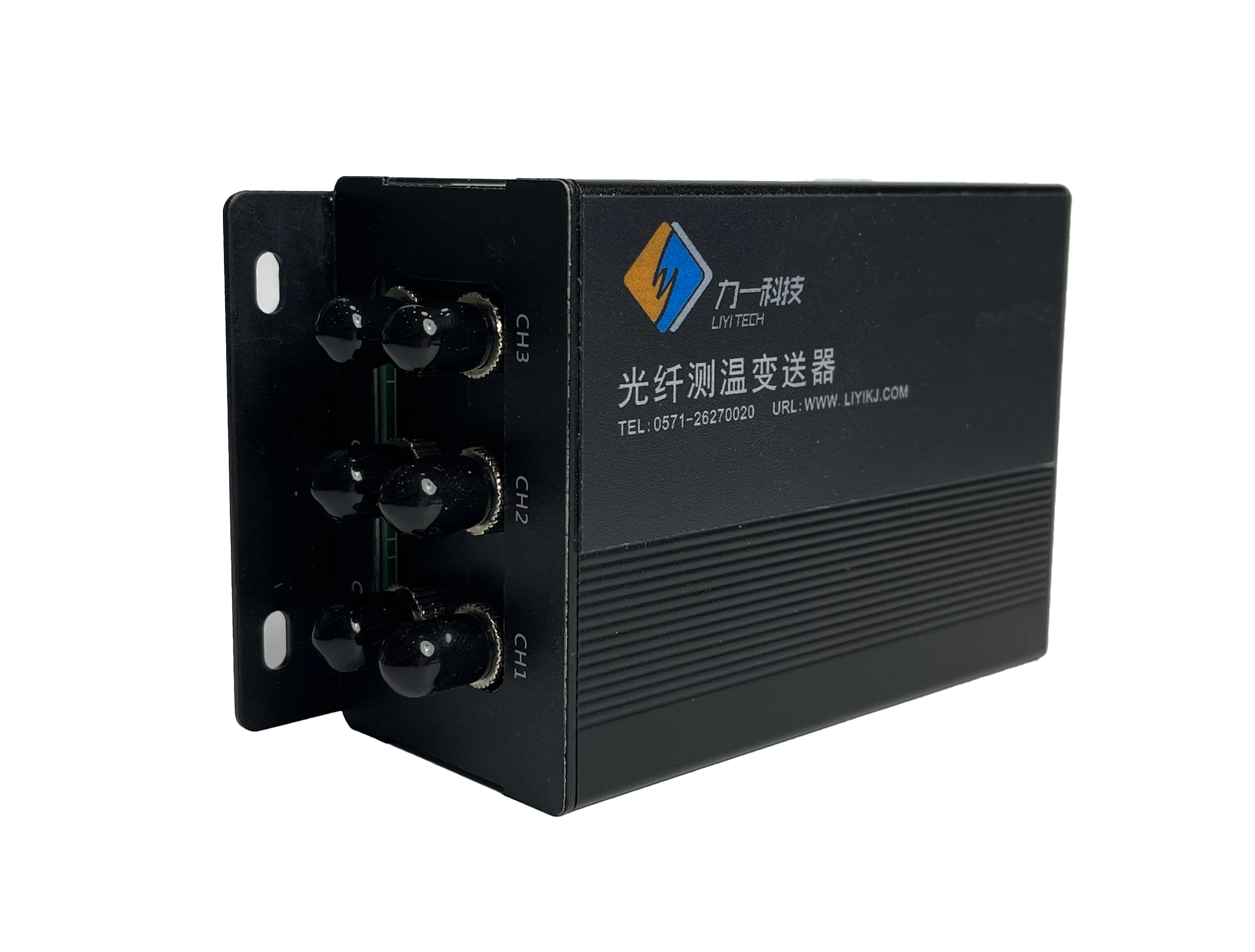
Deploying sensors in hazardous zones protects your personnel. Toxic, explosive, or biologically hazardous areas require strict safety protocols. Routine manual checks force workers into harm's way unnecessarily. Wireless systems eliminate the need to physically access these dangerous environments. Workers stay safe while you gather critical environmental data remotely.
Physical flexibility is another massive advantage. Many industrial environments are hostile to traditional wired setups. Consider the following specific deployment scenarios:
Rotating machinery: Wires tangle and snap on moving parts. Wireless sensors mount directly onto rotors, motors, or bearings safely.
Sterile cleanrooms: Drilling holes for cables compromises cleanroom integrity. Wireless nodes maintain the sterile barrier perfectly.
Sealed environmental chambers: Running cables through insulation creates thermal leaks. Wireless transmitters send data right through the chamber walls.
Specialized transmitters handle extreme temperature ranges flawlessly. You can monitor cryogenic storage down to -200°C for vaccine preservation. Conversely, industrial ovens reaching +370°C can also be monitored safely. You just need to select the appropriate probe housing to match your thermal extremes.
Regulatory compliance often creates massive administrative headaches. Automated reporting solves this problem. Wireless systems maintain uninterrupted, tamper-proof historical logs. You need these unalterable logs for strict regulations like FDA 21 CFR Part 11 and HACCP. The software automatically generates audit-ready reports. You eliminate human error entirely, ensuring inspectors always receive accurate documentation.
Traceability and calibration are equally critical for regulated industries. Pharmaceutical and food-safety applications demand absolute measurement accuracy. You must use sensors backed by NIST-traceable calibration certificates. Failing to maintain these rigorous standards results in heavy regulatory fines. Modern systems track calibration dates and notify you before a certificate expires.
Modern electrical systems also feature advanced anomaly detection. We now see the integration of AI and decentralized data storage in electrical engineering. Blockchains secure data integrity across distributed industrial networks. AI algorithms predict equipment failure before critical faults occur. For example, phase-difference temperature alarms detect early-stage electrical fires. Using a Wireless Temperature Measuring Device in these intelligent networks ensures maximum operational uptime and safety.
You must match the sensor to your specific environment. The wrong choice leads to inaccurate data or premature hardware failure. Technical buyers must carefully evaluate their internal components.
Different industrial applications require entirely different internal sensing technologies. You must balance accuracy, cost, and environmental stability.
Thermocouples: These are best for extremely wide temperature ranges. They suit budget-conscious deployments well. However, they are susceptible to sensor drift over time. They utilize the Seebeck effect to measure thermal gradients effectively.
RTDs (Resistance Temperature Detectors): These represent the industry standard for high accuracy. They offer excellent long-term stability without drifting. You will face a higher initial cost. You must also account for potential slight self-heating during continuous use.
Thermistors: These are ideal for highly controlled indoor environments. They excel in narrow-range applications requiring ultra-fast response times. They are highly sensitive but can be physically fragile.
Sensor Comparison Chart | |||
Sensor Type | Primary Advantage | Notable Limitation | Best Use Case |
|---|---|---|---|
Thermocouple | Extremely wide range (-200°C to +1700°C) | Prone to accuracy drift over time | Industrial ovens, kilns, extreme heat |
RTD (Pt100) | Exceptional accuracy and stability | Higher cost, slight self-heating | Pharmaceuticals, food processing |
Thermistor | High sensitivity, fast response | Narrow temperature range, fragile | HVAC, incubators, ambient monitoring |
The medium dictates your physical probe design. You cannot use a generic sensor for every application. You need immersion or penetration probes for liquids and semi-solids. These are perfect for measuring food core temperatures accurately. You need surface sensors for monitoring heavy machinery and external pipes. Ambient air probes work best for HVAC systems and general facility monitoring.
How your sensor communicates is crucial to system reliability. You have several distinct options to consider.
Protocol | Data Rate | Range & Penetration | Ideal Scenario |
|---|---|---|---|
Wi-Fi | Very High | Low penetration through walls | Office buildings with existing strong IT networks |
Bluetooth | Medium | Short range (local area only) | Manual localized check-ins via mobile apps |
Sub-GHz Radio | Low (sufficient for temps) | Excellent penetration through concrete/steel | Heavy industrial plants and large warehouses |
We highly recommend Sub-GHz frequencies like 868.4 MHz or 915 MHz for industrial environments. They bypass physical obstructions much better than standard 2.4 GHz Wi-Fi.
You must balance battery life against transmission frequency accurately. We want to provide transparent expectations here. Frequent data transmission intervals deplete lithium batteries rapidly. Sending data every minute drains power much faster than sending it hourly. Standard operational life typically ranges between 12 to 24 months. Environmental extremes, like deep freezing cold chains, will also shorten battery life significantly. Always tune your reporting intervals to match actual regulatory needs.
Signal interference creates unexpected dead zones across facilities. Thick concrete, steel walls, and competing industrial frequencies drop signals frequently. Do not expect perfect line-of-sight transmission in a busy factory filled with metal racks. We highly recommend using Mesh network topologies. Mesh allows individual nodes to bounce signals around heavy obstacles. Strategic antenna placements also ensure vital network redundancy. Always map your facility's RF environment before executing a final deployment.
Choosing the right partner guarantees long-term success. You must evaluate their technical capabilities carefully. Do not merely look at hardware specifications.
Hardware and software interoperability should be your first check. Ensure the vendor provides open APIs. You may want flexible integration to merge temperature data with an existing ERP system. Connecting environmental data directly to your Building Management System (BMS) streamlines facility operations immensely.
Calibration and support services separate the best vendors from the rest. A credible Wireless Temperature Measuring Device manufacturer should offer factory-level NIST calibration. They must also provide streamlined pathways for annual recalibration. Swapping out sensors for recalibration should never disrupt your daily operations. Look for manufacturers offering advanced exchange programs.
Data security standards cannot be ignored. Evaluate the manufacturer's data encryption protocols thoroughly. You need bank-level security spanning from the physical sensor to the gateway, and up to the cloud. Strong encryption protects your sensitive operational data from malicious interception.
Wireless temperature measurement requires upfront investment and deliberate network planning. However, the immediate benefits in asset protection far outweigh legacy offline methods. Automated continuous monitoring stops preventable spoilage instantly. Compliance automation saves hundreds of expensive labor hours annually.
We strongly advise technical buyers to initiate a targeted pilot program. Test sensor reliability and software alerting in a localized, high-value asset zone first. Evaluate how the system handles physical obstructions and mobile user notifications. Once validated, you can confidently proceed with a full-scale facility rollout.
A: Most commercial wireless temperature sensors achieve a 300-meter range under clear line-of-sight conditions. However, dense industrial obstacles like concrete walls, metal shelving, and heavy machinery will reduce this functional distance. Utilizing Sub-GHz frequencies or Mesh network topologies helps bypass these physical barriers effectively.
A: Calibration frequency depends heavily on your specific industry regulations. Most pharmaceutical, medical, and food-safety guidelines mandate recalibration every 12 to 24 months. You must ensure this process uses NIST-traceable standards to maintain strict regulatory compliance and prevent measurement drift.
A: Yes, the sensors themselves are battery-powered and operate autonomously. However, for continuous cloud uploading during an outage, your centralized gateway must have a battery backup. Cellular backup modules are also necessary if the facility's local Wi-Fi or Ethernet network drops offline.

