


Views: 0 Author: Site Editor Publish Time: 2026-05-12 Origin: Site


Standard climate control manages basic human comfort. Precision industrial environmental regulation demands absolute stability. Unregulated environments quickly compromise your entire operation. They directly impact production yield, accelerate equipment degradation, and trigger severe regulatory compliance violations. You cannot rely on basic thermostats to protect high-value manufacturing assets. Selecting the right industrial controller requires looking far beyond simple temperature regulation. You must rigorously evaluate PID control logic, absolute sensor accuracy, and robust communication protocols. You also need systems capable of intelligent nuisance alarm filtering to prevent unnecessary workflow disruption. We will explore how advanced controllers mitigate these complex risks. You will learn the exact technologies needed to stabilize critical processing environments. We will guide you through strict industry standards, comprehensive procurement frameworks, and real-world implementation strategies.
Standard building HVAC systems are insufficient for industrial applications; precision requires dedicated feedback loops.
Microbial control and equipment safety (like ESD prevention) demand strict, continuous adherence to specific thresholds (e.g., <60% RH).
An Intelligent Temperature And Humidity Controller utilizes PID or fuzzy logic to eliminate actuator delays and temperature overshoots.
Procurement evaluation must prioritize independent dual-relay outputs, communication scalability (RS485/Modbus), and programmable alarm delays.
Environmental drift creates profound operational vulnerabilities. We often abstract these risks, but they translate directly into specific business costs. Material spoilage represents an immediate financial hit. Raw materials degrade quickly when ambient conditions fluctuate. Shortened equipment lifespan introduces massive replacement expenses. Condensation rusts internal components over time. Furthermore, non-compliance fines from regulatory bodies can paralyze an operation. You must view climate variability as a direct threat to overall profitability.
High moisture levels create serious biological hazards. Relative humidity (RH) above 60% drastically accelerates microbial and mold growth. This reality becomes critical in FDA-regulated spaces. Fungal spores thrive in damp, warm environments. Once mold colonizes a pharmaceutical cleanroom, remediation requires complete facility shutdowns. Controlling moisture is not just about material preservation. It represents a fundamental requirement for human safety and strict regulatory adherence.
Conversely, excessively low humidity introduces equally dangerous physical risks. Dry air fundamentally changes how materials behave. It causes severe electrostatic discharge (ESD) events. In semiconductor manufacturing, a single static shock can destroy an entire batch of microchips. Static sparks also threaten textile plants. Airborne dust and dry fibers ignite easily under static discharge. Controlling these environments requires a high-precision Temperature And Humidity Controller to maintain stable operational bands.
Commercial building management systems (BMS) consistently fail in these scenarios. A standard BMS monitors massive open areas. It lacks the sensitivity required for critical micro-environments. You cannot use a BMS for stability testing chambers or specialized industrial workshops. Standard HVAC programming prioritizes energy savings over strict parameter adherence. Precision manufacturing requires dedicated, localized feedback loops to prevent catastrophic environmental drift.
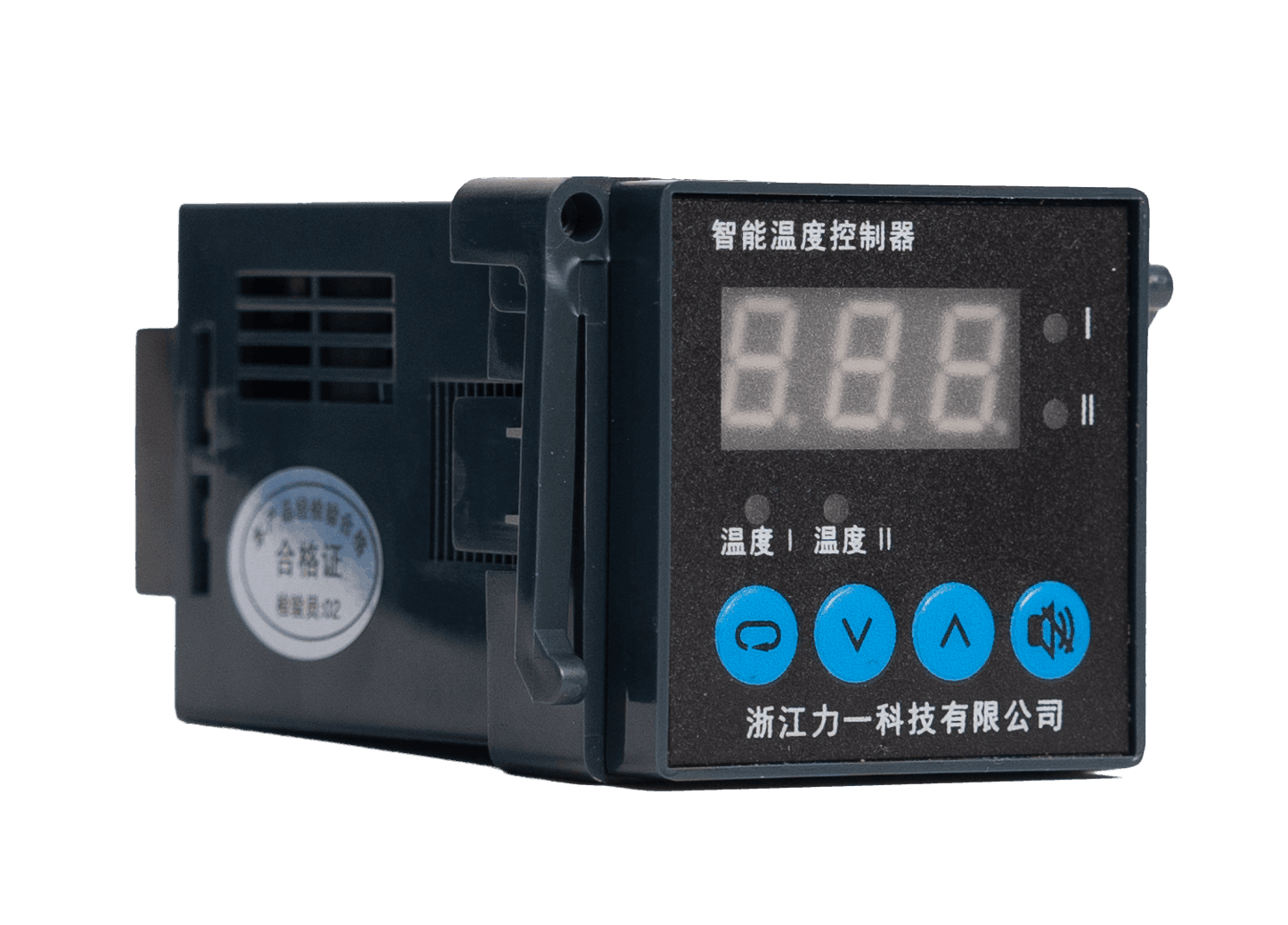
Basic on/off control represents the most rudimentary form of environmental management. Manufacturers often refer to these as ordinary series controllers. They operate using simple mechanical relays. When parameters exceed a threshold, the relay clicks on. When conditions normalize, it clicks off. This setup suits simple applications perfectly. You might use them for basic anti-condensation heating inside electrical cabinets. However, they remain highly prone to hysteresis. They naturally cause severe temperature and humidity swings. They cannot anticipate changes, resulting in constant system overshooting.
Advanced manufacturing demands Proportional-Integral-Derivative (PID) control logic. PID loops offer a mathematical solution to environmental instability. The proportional element reacts to current errors. The integral element addresses historical accumulated deviations. The derivative element anticipates future error rates based on current trajectories. Together, they prevent the system from overshooting target parameters. PID continuously adjusts the output power. It slows down heating or humidification as the environment approaches the exact target setpoint.
Modern industrial sites increasingly adopt advanced algorithms. An Intelligent Temperature And Humidity Controller utilizes sophisticated fuzzy logic. Fuzzy logic reduces your reliance on precise mathematical models of the physical environment. It mimics human reasoning to handle ambiguous data inputs. These controllers offer incredibly rapid response times. They also demonstrate remarkable robustness against industrial electromagnetic interference. They stabilize environments much faster than traditional systems during sudden load changes.
Actuator independence remains a non-negotiable requirement for precision control. You must manage heating and cooling as distinctly separate control loops. The same applies to humidifiers and dehumidifiers. Dual-output systems ensure that these devices do not fight each other. If a single controller tries to blend these outputs poorly, energy waste skyrockets. Independent relays allow the controller to sequence actuators flawlessly. This prevents overlapping actions and ensures total environmental stability.
Pharmaceutical facilities face the strictest environmental regulations globally. You must navigate USP Controlled Room Temperature (CRT) standards carefully. Cleanrooms require complex balancing acts. You must compensate for different gowning levels. For example, operators wear heavy suits in ISO 7 cleanrooms. They will sweat profusely at standard room temperatures. Sweating increases particulate shedding and compromises localized humidity. To prevent this, facilities drop ISO 7 ambient targets to 17-18°C for operator comfort. They must do this while simultaneously maintaining strict RH levels.
Electronics manufacturing and data centers prioritize completely different metrics. They focus heavily on strict dew-point management. Cooling efficiency must balance against moisture control. If the environment drops below the dew point, condensation forms instantly. Microchip defects occur when microscopic condensation shorts out tiny circuits. In data centers, uncontrolled moisture leads to catastrophic server short-circuits. You must maintain cool environments without crossing the critical condensation threshold.
Specialized manufacturing requires incredibly narrow operational bands. Small deviations ruin entire production runs. Printing facilities must maintain exactly 45-55% RH for proper ink curing. If humidity climbs higher, the ink smudges and refuses to dry. Textile manufacturing requires high humidity to keep fibers pliable. Dynamic tire wobble testing facilities also utilize precision controllers to simulate exact road conditions. Meat curing processes rely on specific temperature declines paired with precise moisture extraction.
Common Industrial Environmental Standards | |||
Industry Segment | Typical Target Temperature | Typical Target RH | Primary Risk Prevented |
|---|---|---|---|
Pharmaceutical Cleanroom (ISO 7) | 17°C - 18°C | 40% - 55% | Microbial growth and operator shedding |
Semiconductor Fabrication | 20°C - 22°C | 30% - 45% | Electrostatic discharge (ESD) |
Commercial Printing | 21°C - 23°C | 45% - 55% | Ink smudging and paper curling |
Meat Curing/Aging | 10°C - 15°C | 70% - 85% | Case hardening and spoilage |
Sensor accuracy dictates the ultimate success of your environmental strategy. You must thoroughly evaluate the inherent drift rate of industrial sensors. All sensors lose calibration over time due to chemical exposure and particle buildup. You should require interchangeable, high-humidity resistant probes. These probes allow technicians to swap sensors without re-wiring the entire control panel. Heavy-duty probes withstand harsh cleaning chemicals and resist saturation in environments approaching 95% RH.
Scalability and networking capabilities transform a basic controller into a facility-wide asset. You must assess communication interfaces carefully. DIN-rail mounted units integrated with RS485/Modbus protocols are mandatory for modern plants. They allow direct integration into broader SCADA networks. Wi-Fi capabilities push data to IoT prediction systems for remote monitoring. Selecting a highly networkable Temperature And Humidity Controller guarantees that your facility remains future-proof as automation demands increase.
Alarm software logic often differentiates excellent controllers from frustrating ones. You must evaluate a controller’s nuisance filtering capabilities. Programmable alarm delays are crucial for daily operations. You should configure 1-4 hour delays for specific humidity alerts. This prevents false positives triggered by routine wet-cleaning procedures. Washing a cleanroom floor temporarily spikes localized humidity. Since mold spores require more than 24 hours to germinate, a brief humidity spike does not warrant a disruptive compliance alarm.
You must also decide between rapid-deployment units and permanent installations. Both form factors serve distinct purposes.
Comparison Chart: Plug-and-Play vs. Hardwired Controllers | ||
Feature | Plug-and-Play Units | Hardwired Industrial Controllers |
|---|---|---|
Deployment Speed | Instant setup. Pre-wired power receptacles. | Requires professional electrical installation. |
Ideal Applications | Small incubators, isolated stability chambers. | Factory HVAC integration, panel-mounted systems. |
Load Capacity | Limited to standard outlet amperage (e.g., 10A - 15A). | Scalable. Drives heavy-duty external contactors. |
Form Factor | Standalone box or wall-mounted chassis. | Standard DIN-rail or 1/4 DIN panel cutout. |
Physical setup represents only the beginning of implementation. PID tuning challenges often frustrate installation technicians. An untuned PID controller functions poorly, leading to erratic environmental swings. You must rely on industry-standard calibration methods to stabilize the control loop. The Ziegler-Nichols method provides a reliable mathematical foundation for tuning.
Disable Integral and Derivative: Set the I and D values to zero, operating only on Proportional gain.
Increase Proportional Gain: Raise the P value until the system begins to oscillate consistently around the setpoint.
Record the Ultimate Gain: Document the exact gain value and the period of oscillation.
Apply Standard Multipliers: Use the Ziegler-Nichols formula table to calculate your final P, I, and D parameters.
Conduct Load Testing: Introduce a sudden environmental change (like opening a chamber door) and observe the recovery speed.
Managing sensor drift requires proactive maintenance schedules. Even premium sensors drift slightly over months of continuous operation. You must establish routine calibration schedules using certified reference meters. During initial threshold programming, establish a ±5% error margin. This margin accommodates minor sensor fluctuations without triggering unnecessary mechanical interventions. Consistent calibration ensures your recorded data remains compliant during official regulatory audits.
Overcoming actuator delay requires strategic physical planning. A lag always exists between the controller's command and the physical response. If a humidifier turns on, steam takes time to travel through ductwork. You must place sensors optimally to avoid this lag. Never place a sensor directly next to a humidifier output. It will read the moisture instantly and shut off the system before the wider room reaches the target. Place sensors near the return air ducts. This ensures they measure the blended, stabilized air from the entire controlled space.
Industrial temperature and humidity control represents a critical risk-management investment. It is not merely a basic facilities upgrade. Absolute environmental stability protects your raw materials, extends machinery lifespan, and guarantees regulatory compliance. Without precise PID and fuzzy logic, your systems will constantly battle overshoots and costly energy waste.
Decision-makers must audit their exact compliance requirements thoroughly. Review FDA, ISO, or industry-specific guidelines before you select your equipment. Match your sensor precision and control logic strictly against those operational baselines. Determine whether you need basic on/off relays for simple cabinets or fully networked PID loops for cleanrooms.
Do not leave your manufacturing environment to chance. Consult with experienced application engineers to specify the exact intelligent controller and sensor housing for your unique facility. Proper integration ensures long-term operational resilience and uncompromised product quality.
A: Industrial controllers manage two variables simultaneously, utilize predictive PID logic to prevent overshoots, and feature industrial communication ports (RS485) rather than basic residential wiring.
A: Intelligent models utilize fuzzy logic and PID to adapt to dynamic environmental changes, offer remote IoT monitoring, and prevent the system from constantly cycling on and off.
A: Utilize a controller with programmable alarm delays. Setting a 1-to-4-hour delay prevents temporary spikes (like those from floor washing) from triggering compliance alerts, since mold spores require >24 hours to germinate.

