


Views: 0 Author: Site Editor Publish Time: 2026-05-22 Origin: Site


Relying on manual temperature logging puts entire operations at unnecessary risk. Human error, infrequent checks, and delayed responses can quickly lead to catastrophic inventory loss or severe compliance breaches. For highly regulated industries, these blind spots are completely unacceptable. Transitioning to an automated system solves these issues but demands careful planning. You must strategically balance measurement accuracy, network reliability, and strict data security without disrupting daily operational workflows.
Finding the right fit requires understanding both hardware capabilities and software integration. This guide completely deconstructs the architecture of a Wireless Temperature Measuring Device. We will outline realistic deployment considerations and provide a practical framework. You will learn how to properly evaluate solutions and vendors across demanding industrial, clinical, or logistical environments.
Wireless temperature monitoring relies on a four-part architecture: sensing probe, localized processing, data transmission (gateway), and cloud/API application.
Selecting the right device requires matching the physical sensor (RTD, Thermocouple, Thermistor) and transmission protocol (LoRaWAN, Wi-Fi, Bluetooth) to the specific environmental constraints.
The primary ROI drivers are regulatory compliance (automated audit trails), reduced labor costs, and preventative asset protection via automated escalation alerts.
Choosing a reliable wireless temperature measuring device manufacturer hinges on evaluating their calibration services, API integration capabilities, and device security protocols.
Understanding a wireless monitoring system requires looking beyond the physical probe. The technology relies on a continuous, closed-loop process. It moves from physical heat measurement to actionable digital alerts. We can break this data flow into four distinct layers.
Perception Layer (The Probe): This acts as the physical frontline. The element reacts directly to thermal changes in the surrounding environment. Different metallurgical or semiconductor properties generate distinct electrical shifts based on heat exposure.
Processing Layer (Microcontroller): The system must translate raw electrical changes into readable formats. A localized microcontroller converts analog voltage or resistance into digital data. Engineers frequently apply compensation algorithms here. These algorithms maintain high accuracy, especially in dual temperature and humidity sensors where moisture levels skew thermal readings.
Transmission Layer (Transmitter & Gateway): Once digitized, the device packages the data packet. It then transmits this payload securely over a designated wireless frequency. The gateway acts as a bridge, collecting localized radio signals and pushing them to broader networks.
Application Layer (Cloud/Software): The software serves as the final destination. It aggregates incoming data and triggers immediate threshold alerts. It also stores unalterable logs to ensure strict regulatory compliance.
Implementation reality often challenges theoretical architecture. A system ultimately depends on gateway connectivity and local power management. You must balance transmission frequency against battery life. Sending data every second drains batteries rapidly, while hourly transmissions risk missing critical temperature spikes. Successful deployments find the optimal middle ground.
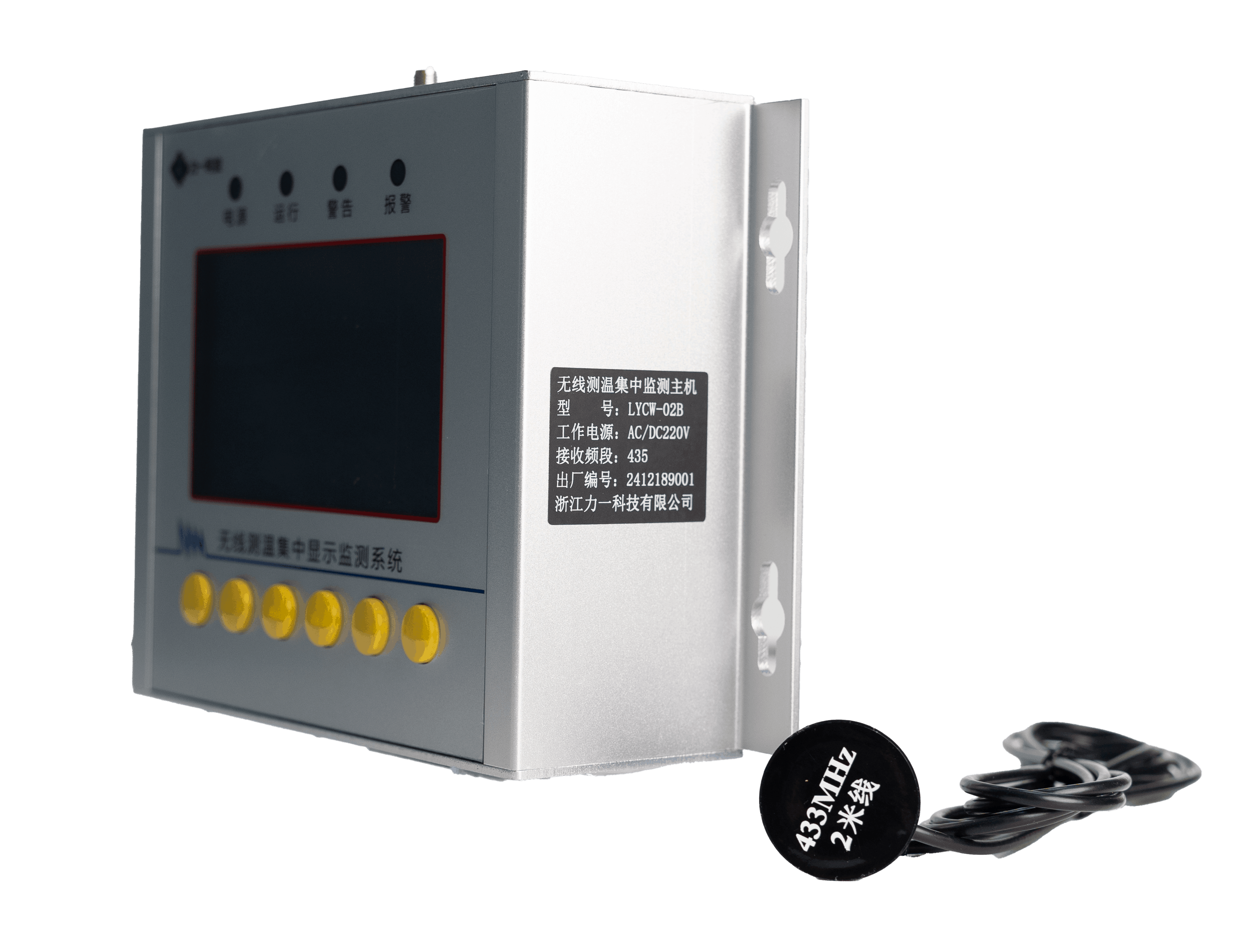
Selecting the right hardware combination dictates long-term success. You must match the physical sensor to your accuracy needs and the transmission protocol to your facility layout.
Engineers primarily rely on three sensor technologies. Each offers specific trade-offs regarding durability, precision, and range.
Thermocouples: These handle extreme industrial heat flawlessly. They measure up to 4,200°F using dissimilar metals. While highly durable, they suffer from long-term temperature drift. They also exhibit lower linearity compared to alternatives.
RTDs (Resistance Temperature Detectors): These sensors provide the highest precision and stability over time. They utilize pure metals like platinum. They are ideal for clinical laboratories and cleanrooms. However, they carry a higher upfront cost.
Thermistors: These ceramic or polymer components remain highly sensitive within narrow temperature bands. They suit targeted environmental monitoring perfectly. Unfortunately, they are physically fragile and prone to damage in harsh environments.
Moving data from the sensor to the cloud requires the right radio frequency. No single protocol works perfectly everywhere.
Wi-Fi: This protocol leverages existing IT infrastructure. It delivers real-time, high-frequency data seamlessly. The major drawback involves high power consumption. Devices require frequent battery changes or direct power lines.
LoRaWAN: This represents the gold standard for cold chain and large-scale industrial sites. It operates on sub-GHz frequencies. This allows long-range signal penetration through thick walls and metal refrigerators. It consumes very little power, though it offers low data bandwidth.
Bluetooth (BLE): Bluetooth serves localized spot-checking well. It fits wearable health devices perfectly. It manages short-range data offloading efficiently within a 30-foot radius. It struggles in large, complex facility layouts.
Component Type | Primary Advantage | Notable Limitation | Best Use Case |
|---|---|---|---|
Thermocouple | Extreme temperature endurance | Long-term drift, low linearity | Industrial furnaces, metallurgy |
RTD | Highest stability and precision | Higher cost, requires power | Cleanrooms, clinical labs |
Thermistor | Hyper-sensitive in narrow ranges | Physically fragile | Incubators, ambient offices |
Wi-Fi | High bandwidth, existing network | High power consumption | HVAC monitoring, smart buildings |
LoRaWAN | Long range, wall penetration | Low data transfer rates | Warehousing, remote agriculture |
Modernizing your facility does more than simply digitize an analog process. It transforms reactive maintenance into proactive risk management. When deploying a Wireless Temperature Measuring Device across various fields, you unlock several structural advantages.
Regulators like the FDA, MHRA, and HACCP demand strict operational transparency. Manual logs invite human error and intentional falsification. Automated systems replace error-prone paper trails entirely. They generate time-stamped, unalterable digital audit logs. This guarantees compliance during sudden inspections. It proves your environmental controls remained intact throughout the production cycle.
Relying on staff to notice a failing freezer often leads to disaster. Automated alerting mechanisms remove human delays entirely. Systems trigger immediate interventions via SMS, Email, or API calls when thresholds are breached. Multilevel escalation protocols ensure the alert reaches a supervisor if the primary technician misses it. This immediate response prevents catastrophic product spoilage and costly equipment failures.
Many critical monitoring points exist in dangerous locations. Chemical plants, high-voltage areas, and confined spaces threaten personnel safety. Remote monitoring eliminates the need for technicians to manually check readings in hazardous zones. Furthermore, wireless architecture removes the heavy capital expense associated with extensive hardwiring and cable conduit installation.
Different industries extract value from wireless monitoring in unique ways. However, successful implementation requires strict adherence to physical deployment rules.
Cold Chain Logistics: Monitoring transit vehicles prevents food or pharmaceutical degradation. Systems track large-scale refrigerated warehousing environments continuously. They ensure vaccines and perishables stay within extremely narrow temperature corridors.
Data Centers & HVAC: Thermal runaway can destroy millions of dollars in server equipment. Wireless monitors integrate directly into building management systems. They optimize cooling efficiency dynamically and map hot spots across server aisles.
Industrial Manufacturing: Heavy machinery generates excess heat before total mechanical failure. Strategically placed sensors enable predictive maintenance. They monitor localized heat generation on bearings, motors, and hydraulic presses.
Even premium sensors fail if placed incorrectly. You must avoid common placement errors to ensure signal integrity and accurate readings.
Do not place sensors in the direct airflow of cooling units. This registers artificially low temperatures. Avoid placing devices near heat-generating lighting or electrical motors. Never shield sensors entirely behind heavy metal racking, as this severely degrades wireless signal transmission.
For large volume spaces like cold storage rooms, never rely on a single central node. Utilize a multi-point matrix deployment instead. Place sensors at the front, center, and back of the room. Position them near doors to capture fluctuation impacts during loading operations. This grid setup guarantees a holistic thermal map.
Hardware specifications only tell half the story. Partnering with a proven Wireless Temperature Measuring Device manufacturer guarantees long-term system viability. You must rigorously evaluate their operational support and security infrastructure.
Sensors naturally drift over time due to environmental stress. Ask how the manufacturer handles ongoing accuracy. Do they offer NIST-traceable calibration certificates out of the box? Evaluate their recalibration schedules. Some vendors offer hot-swappable sensor heads. This allows you to replace the probe without removing the entire transmitter unit, minimizing operational downtime.
Industrial IoT requires robust digital defenses. Unsecured sensors provide hackers an easy entry point into your broader enterprise network. Look for mandatory TLS encryption for all data in transit. Demand zero-trust device authentication mechanisms. Additionally, secure firmware-over-the-air (FOTA) update capabilities are non-negotiable. They allow you to patch vulnerabilities remotely without dispatching technicians.
A closed ecosystem limits future scalability. Evaluate the software's openness before purchasing hardware. A viable solution should offer open APIs. It must feature protocol translation gateways capable of speaking standard industrial languages like Modbus or MQTT. This ensures the new wireless sensors integrate seamlessly into your legacy SCADA, ERP, or Quality Management Systems.
Investing in a wireless monitoring architecture represents a strategic operational shift. It is less about purchasing specific hardware components and more about establishing a resilient, automated data pipeline. This pipeline enforces quality control, protects valuable assets, and guarantees regulatory compliance automatically.
Before committing to a massive facility-wide rollout, take measured steps. Scope a small pilot program first. Test signal penetration in your most challenging physical environments, such as dense freezers or heavy manufacturing floors. Finally, have your IT team validate the manufacturer's API documentation. Ensuring seamless data integration upfront prevents expensive bottlenecks later.
A: Battery life varies entirely based on the transmission protocol and reporting frequency. Wi-Fi devices might require battery replacements every 12 to 18 months due to heavy power consumption. Low-power networks like LoRaWAN can sustain battery life for 5 to 10 years, assuming they only transmit small data packets periodically.
A: High-quality devices utilize local edge caching. They feature internal memory chips capable of storing thousands of temperature readings locally. If the gateway loses internet connectivity, the sensor continues logging offline. Once the network connection restores, the device automatically syncs the cached data back to the cloud, preventing gaps.
A: Industry standards generally dictate annual or bi-annual calibration. However, the exact frequency depends on your specific regulatory environment. Strict FDA pharmaceutical compliance often demands strict 12-month NIST-traceable recalibrations. High-heat industrial applications may require more frequent checks due to accelerated metallurgical sensor drift.

